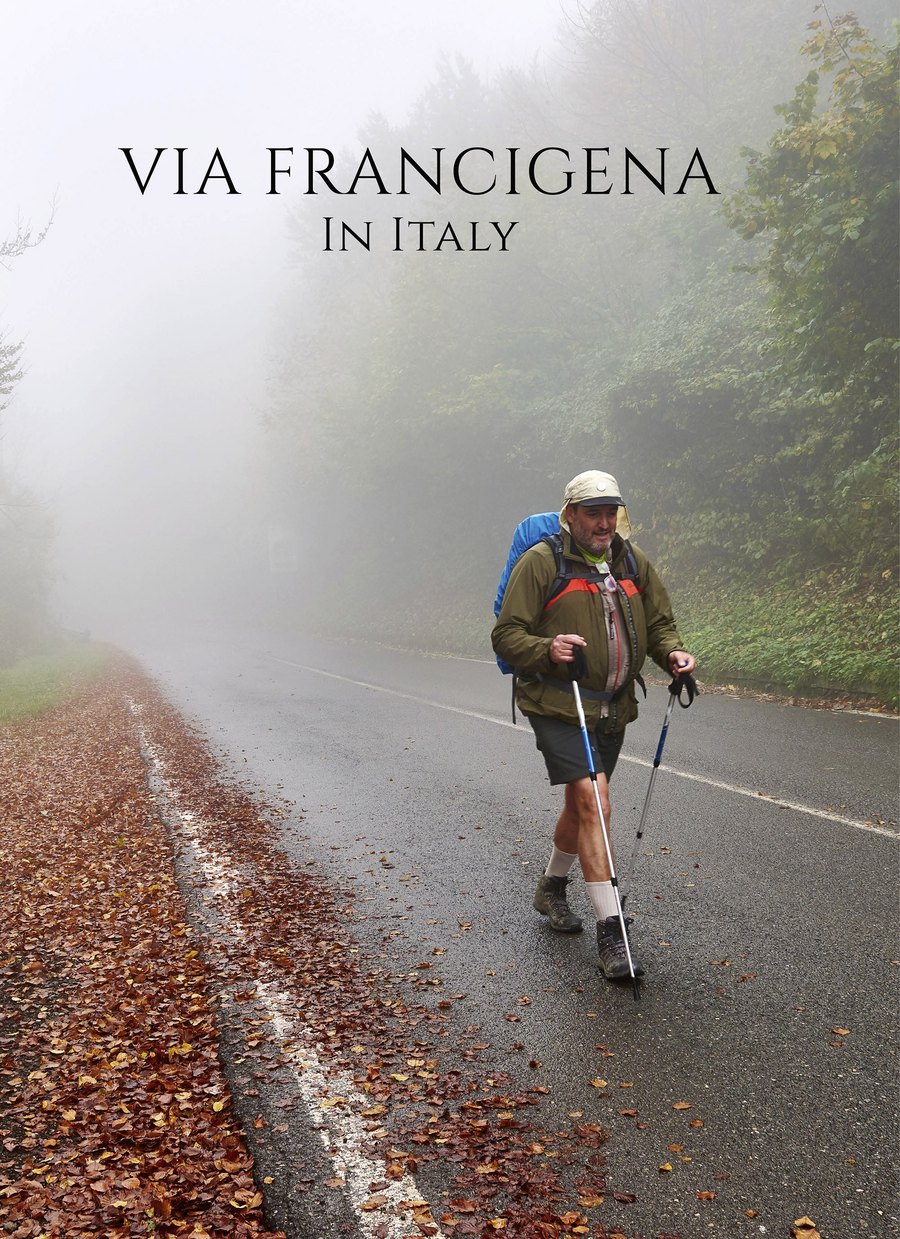
The Via Francigena is not a guidebook. It is a photographic and inspirational journey along one of Europe’s most enduring pilgrimage routes, conceived as a visual essay where landscape, memory, and spiritual heritage converge.
The narrative follows the historic path from the Alps to Rome, and continues symbolically toward the ports of southern Italy, echoing the medieval intention of pilgrims bound for Jerusalem. Rather than focusing on distances, accommodations, or practical instructions, the book explores the environments crossed, the religious and artistic landmarks, and the cultural continuity shaped by centuries of movement along this route.
Photography is the primary narrative language. Images are sequenced to convey rhythm, silence, and transition: mountain passes, rural plains, ancient roads, abbeys, and churches. The emphasis is on atmosphere and continuity rather than description, inviting a contemplative reading experience in which human presence is suggested rather than documented.
The project exists in multiple editorial forms, each designed with a distinct reading experience in mind. The hardcover and paperback editions are conceived as pure visual essays: uninterrupted photographic sequences, free from georeferencing or technical mapping, intended for slow reading and visual immersion. The pocket edition offers a more essential structure, where selected images are linked to locations through QR codes. The Kindle, Apple Books and Google Play editions expand the visual narrative with georeferenced Google Maps locations, allowing readers to connect images and chapters with their precise position along the route.
Conceived as a journey rather than a manual, this work invites readers to experience the Via Francigena as a continuum — from the highlands of northern Italy to Rome, and onward toward the Mediterranean — where landscape, spirituality, and art form a single, uninterrupted passage.